REPELLENCE EFFICACY / DISEASES
Effective protection starts with knowledge. Mosquito-borne diseases such as dengue, zika, chikungunya, and malaria continue to spread globally, with higher incidence in tropical and subtropical regions.

ASSOCIATED DISEASES
Vectors play a key role in the transmission of various diseases.
Below, you can find the main types of vectors and the diseases associated with each of them.
ANOPHELES GAMBIAE
Malaria
AEDES AEGYPTI AND ALBOPICTUS
Dengue, Zika, Chikungunya and Yellow Fever
CULEX SPP.
West Nile Virus and Encephalitis
IXODES AND AMBLYOMMA SPP
Lyme disease, Ehrlichioses, Tularemia
LIKE DEER , BLACK AND STABLE FLIES
Fly fever, Bartonellosis and Leischmaniasis
Cause intense itching and irritation, allergies and infections
The bite can induce adverse reactions, ranging from localized pain and swelling, to potentially fatal conditions
VECTORS CAN CAUSE NUMEROUS DISEASES IN HUMANS
Vectors pose an increasingly significant threat to public health, driven by environmental and behavioral factors that expand their presence and impact.
RISK
80% of the world’s population is at risk of one or more vector-borne disease
BURDEN
17% of the global burden of communicable diseases is due to vector-borne diseases
MORTALITY
Over 700 000 deaths are caused by vector-borne diseases annually
According to the World Health Organization (WHO), in its document “Global vector control response 2017–2030,” diseases transmitted by vectors—such as mosquitoes, ticks, and other organisms—represent a serious threat to global health. These diseases are responsible for about 17% of communicable diseases and cause more than 700,000 deaths per year, disproportionately affecting poorer populations, especially in tropical and subtropical areas.
Despite some progress, the situation for many of these diseases has worsened due to factors like unplanned urbanization, global travel, and climate change, which expand the reach of vectors. This complexity and unpredictability underscore the critical need to adopt adaptive and sustained approaches to vector control in order to effectively prevent and reduce disease transmission.”
EUROPEAN REGULATORY COMPLIANCE
Trust only products that prove what they claim and act in compliance with the regulatory framework.
WHAT IS THE PURPOSE OF BIOCIDAL PRODUCTS REGULATION?
The purpose of BPR (Regulation (EU) No 528/2012) is to improve the functioning of the internal market through the harmonisation of the rules on the making available on the market and the use of biocidal products, whilst ensuring a high level of protection of both human and animal health and the environment. The provisions of this Regulation are underpinned by the precautionary principle, the aim of which is to safeguard the health of humans, the health of animals and the environment. Particular attention shall be paid to the protection of vulnerable groups.
WHAT IS THE DEFINITION OF BIOCIDAL PRODUCTS?
(according to item a), of Article 3, of BPR)
‘biocidal product’ means
- Any substance or mixture, in the form in which it is supplied to the user, consisting of, containing or generating one or more active substances, with the intention of destroying, deterring, rendering harmless, preventing the action of, or otherwise exerting a controlling effect on, any harmful organism by any means other than mere physical or mechanical action,
- any substance or mixture, generated from substances or mixtures which do not themselves fall under the first indent, to be used with the intention of destroying, deterring, rendering harmless, preventing the action of, or otherwise exerting a controlling effect on, any harmful organism by any means other than mere physical or mechanical action
A treated article that has a primary biocidal function shall be considered a biocidal product.
Authorisations: European Chemical Agency Link: (https://echa.europa.eu/information-on-chemicals/biocidal-products/-/disbp/factsheet/NL-0015633-0000/authorisationid); Federal Office for Chemicals (BfC) at BAuA (Germany); DGS – Direção Geral da Saúde (Portugal); ANSES – Agence nationale de sécurité sanitaire de l’alimentation, de l’environnement et dutravail (France); Dirección General de Salud Pública, Calidad e Innovación (Spain); Board for the Authorisation of Plant Protection Products and Biocides (Ctgb, The Netherlands); Health and Safety Executive (Great Britain and Northern Ireland).
ANTI-INSECT SPRAY FOR TEXTILE
Lorem ipsum Lorem ipsum Lorem ipsum Lorem ipsum

Shake bottle several times before use.
The spray should be applied, in well ventilated space, with the bottle vertically and at 15 cm distance from the clothing.
Spray to evenly homogenize the textile (1.6 ml of product per square meter – equivalent to 5.43 ± 0.5 g of IR3535®).
Dry your clothes completely before wearing.
Re-apply whenever the textile gets wet (from rain or swimming, e.g.), after 3 months or after 1 domestic laundry cycle – for tropical mosquitoes – and after 1 month or after 3 domestic laundry cycle – for ticks – to ensure the repellent efficacy.

ANTI-INSECT SPRAY FOR TEXTILE / CONVERSION
Trust only products that prove what they claim and act in compliance with the regulatory framework.

ADDITIVE PLUS FOR SURFACES
Lorem ipsum Lorem ipsum Lorem ipsum Lorem ipsum

Mix the additive bottle before use.
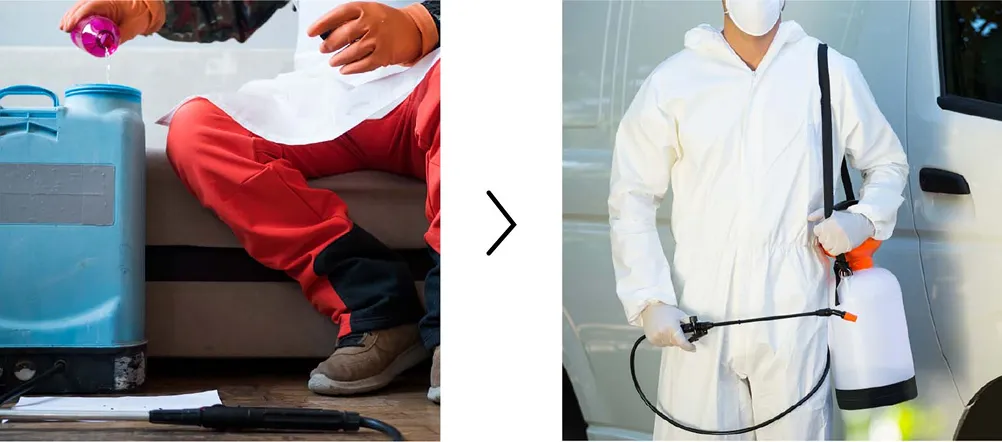
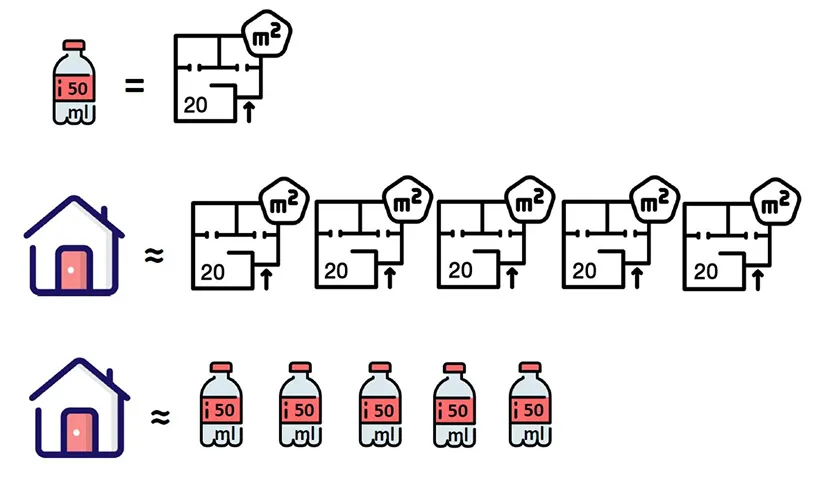
Slowly dilute 50 ml of the additive with 950 ml of clean water, to get a liter of ready to use solution (5% of additive per liter of diluted solution).
Mix well until homogenization.
Pulverize the surfaces using a sprayer, to evenly humidify the surfaces. 1000 ml is enough to treat a surface of 20 square meters.
For full outdoor effectiveness, re-apply the product whenever there is a risk of deterioration due to environmental factors (rain, wind, high temperature).

ADDITIVE PLUS FOR SURFACES / CONVERSION
NANOFOR PLUS (2IN1) FOR TEXTILE+SKIN
Textile: Follow the instructions for anti-insect spray textile
Skin: For effective protection, apply the product to all uncovered parts of the body, at a distance of 10 to 15 cm. On the face, spray the product in the palm of the hand and apply avoiding contact with the eyes and mouth. Renew the application at least every 8 hours and in case of intense activity, every 6 hours. Reapply after bathing or showering. Do not apply to children under 2 (two) years.